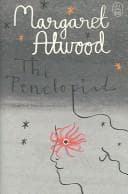
Few things stir the blood like injustice, and that is where The Penelopiad (2005) takes root. When Odysseus finally returns to Ithaca from his 20-year , not only does he kill the many suitors who wished to take his wife Penelope’s hand, but he also hangs a number of the young maids, guilty by association. These latter deaths never sat well with Atwood––or with many others, if my high school English class is at all representative––and the introduction states that this novella is an attempt to come to terms with this, by exploring the events that led to this tragic outcome.
More reviews
Odyssey
I think of Atwood as a kind of "anti-DeLillo." Canadian vs. American, woman vs. man, poetry vs. prose, academic vs. self-taught, etc. Most importantly, when it comes to their writing, DeLillo isn’t great at high concept (though he definitely tries), but he is erudite and is a fantastic prose stylist; Atwood on the other hand, is great at high-concept (“The Odyssey but from the wife’s side”), but comes off like she’s never read a nonfiction book in her life and has rigid, plodding prose. This isn't actively bad, but gets grating at length. (I do enjoy some of Atwood's poems; her short, staccato phrasing works better in that context, I think.) With an appropriate frame, it can blend in with the scenery, as is the case here, where half of the book is bawdy poetry and the other half is narrated by a lady who is "street smart but not book smart."
A modern retelling of Greek myth isn't exactly rocking the boat; even restricting to ones told from a female perspective, you can probably find at least a half dozen best-sellers published in the post-Covid era. But to give Atwood a little credit, The Penelopiad was published as one of the initial books of the Canongate Myth Series, where authors from around the world were asked to re-imagine ancient myths. Conceived by Scottish publisher Canongate Books, it was originally meant to be released simultaneously in multiple languages––the first book in the series, A Short History of Myth, was published the same day in 33 countries––and run for about a hundred books. But after the first wave, the simultaneously publication idea was quickly dropped and from 2005 to 2013, a total of 18 books were published before the series went on indefinite hiatus.
Focusing back on the story itself,The Penelopiad is, naturally, told primarily through Penelope, with the slain maids forming the chorus, and starts when she––princess of Sparta, age 15––is to be wed. She has modern sensibilities, but with the same concerns as any debutante: romance, marriage, eagerness and reluctance to leave home, a love-hate relationship with relatives, and of course, the invisible girdings of status and reputation. Except that her beau is the brilliant trickster Odysseus, her cousin is Little Miss Perfect Helen of Troy, and she is fated to wait on remote Ithaca while her husband has been missing for years, without a word, as she drives herself half-crazy listening to the rumors that float in with each passing ship. Is Penelope's famed loyalty a sign of inner strength, or is she just stuck between a Scylla and Charybdis of her own?
When it comes to exploring the promised premise, having a chorus of slaughtered maids is a clever concept and having Penelope bear some of the responsibility as their boss has potential, but it does not really go far enough. Without the epic battles and much of the supernatural aspects, we are reduced to a domestic tale, but one that falls flat due to lack of development in character and plot. Atwood is often cast as a feminist writer, but The Penelopiad is a prime example of why that's usually mistaken. While there is a case for young maids to be but helpless victims––of society, if not circumstance––the Penelope of The Odyssey is smart, strong, patient, and faithful, somebody anybody would want in their corner; the Penelope of The Penelopiad is almost unrecognizable in this regard, lacking agency, more "damsel in distress" than somebody who managed, against all odds, to take control of her own destiny. Perhaps this doubtful, hesitant Penelope is more realistic and relatable, but how would an Athena, a Circe, a Calypso, and most of all Penelope herself view her actions? Where is the power in casting yourself as the victim?
Overall, it's light reading. Light in weight, light in content, light in impact. Good for a brief stroll through an interesting premise or if you're already a fan of Atwood or retellings of Greek myths, but hardly essential otherwise. Justice awaits a more able advocate.


You could check out Watch what you hear : https://www.lit.salon/books/OL20763043W/watch-what-you-hear-penelopes-dream-of-twenty-geese
The Last Psychiatrist analyzes Penelope's dream. It is an interesting take on the character.