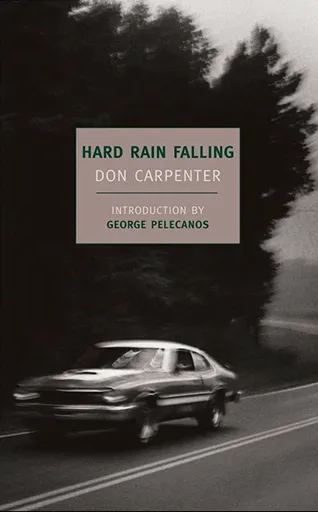

Gay prison love ; class difference marriage; existential crisis. It's really hard to decide where the weight falls in this novel. I found myself getting annoyed with its drifty 1960s nature but at the end, it's very rewarding in the way that character studies are. It's pretty much a character study of a guy, who, if we were to diagnose him, has some form of oppositional defiance disorder. Interestingly, Carpenter isn't at all didactic or judgemental about his characters – he really knows what hopelessness looks and feels like — but the ending is so angry. So angry while being totally unexpected. Basically, eat the rich, is what he's saying.
Jack Levitt, an orphanage boy, juvenile delinquent and hustler, doesn't have any ambitions — he knows how things are going to work out already, so he's just there for the ride:
He had desires, and nobody was going to drop out of the sky to satisfy them. He tried to milk a little self-pity out of this thought, but it did not work: he had to recognise that he preferred his singularity, his freedom. All right. He knew what he wanted. He wanted some money. He wanted a piece of ass. He wanted a big dinner, with all the trimmings. He wanted a bottle of whiskey. He wanted a car, in which he could drive a hundred miles an hour (he had only recently learned how to drive, and he loved the feelings of speed and control, the sharpness of the danger). He wanted some new clothes and thirty-dollar shoes. He wanted a .45 automatic. He wanted a record player in the big hotel room he wanted, so he could lie in bed with the whiskey and the piece of ass and listen to “How Hight the Moon” and “Artistry Jumps.” That was what he wanted . So it was up to him to get these things.


I love this novel but I have to disagree with a few points here.
"Basically, eat the rich, is what he's saying."
I don't think this is the case at all. Some of the characters most sympathetic to Jack's plight are higher-status than him: the DA who tries to give him an easy deal comes to mind, as does Bronson, who pointedly wants to make sure Jack's son is unashamed of his father.
"a love affair - the love affair of his life - with a black hustler"
I don't think it's Jack's love affair. Billy seems to be the one with emotional investment. Jack just wants to get a physical release. He names his son Billy, but even then struggles with the lack of feeling he has for the guy who sacrificed himself for him.
Btw, this book was originally sold as gay smut. Look up some of the early covers, they're pretty funny.
I felt like the end was ambiguous and ambivalent ... Bronson wants to change Billy Jr's name. Perhaps he knows about the original Billy (I can't remember), but it's a way of erasing Jack, despite his best intentions for the son. The other thing is that Bronson is there from the beginning and he bides his time until Sally gets bored - he knows she'll come back because someone like Jack could never be good enough. Maybe 'eat the rich' was too strong!
I got the feeling it was Jack's love affair too? The prison section doesn't constitute a huge part of the novel but Billy stays present to him. I agree - he doesn't get the sacrifice but I also think Jack doesn't get sacrifice in general.
Thanks for the covers tip...kind of weird that it's not re-marketed as a gay classic (although the smut content is low, so probs covers would be different?!). Missed opp.