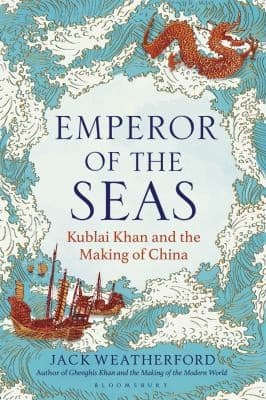


It's an interesting read, but the title is selling a different book to what it is. Weatherford gives a fascinating overview of China immediately following the Mongol conquest. We accompany Kublai then during his life as he rises to become the first Yuan Emperor. Due to the river protecting the Song dynasty in the South, the Yuan learn to build a navy and Kublai gets pronounced Emperor of the Seas. However, Mongolian naval "dominance" does not last...
When I picked this book up I was expecting two things: 1. detailing how Mongols learned to sail and, besides the Kamikaze typhoons, took great victories on the water and 2. a story of how the Yuan forever changed the trajectory of China.
I guess I got a little bit of both, but I feel a little short-changed. There is an interesting 60% which follows Mongolian history from the conquest of China and keeps tabs on the Golden Horde, Ilkhanate and other Mongol adventures. It drops some fascinating anecdotes and details elements of Marco Polo's expeditions, and Medieval trade. The river campaign vs the Song is especially interesting, as are the failures against the Dai Viet.
There is a frustrating tendency however of sudden narrative changes. Weatherford has you thinking that Kublai is sitting on the greatest navy ever seen... until suddenly it isn't. Next chapter, that same fleet is suddenly shoddy and ill-disciplined and not worth the wood its built from. There's battles in the book that the Mongols are described as having lost painfully, yet in the next chapter they're treated as victories. The Yuan take on an expedition into the Majahpahit Kingdom to secure the sea lanes in the area. The expedition is destroyed... and yet the next chapter tells you that the seas were now secure. I get that this may well have happened historically, but the book doesn't do enough to explain just what the hell is actually going on. There's a lot of interesting morsels but I wanted a deeper and slower development.