
The use of artificial intelligence (AI) in education is currently one of the most hotly-debated topics in academia. What should be allowed? What should be used, by both teachers and students? Should it be a part of the curriculum? What would be the cost of using it? Of ignoring it? What would getting an education, or at least receiving a diploma, mean under such a change?
Emotions run high, it's too new and capital-poisoned for good data, and informed discussion is absent, caught in a Bermuda Triangle between self-aggrandizing AI companies and their fanboys, the predictable "No AI is good AI" absolutist reaction, and black-pilled pseudo-Cassandras disappearing into a sweet-smelling mist. Is there any reasonable voice out there?
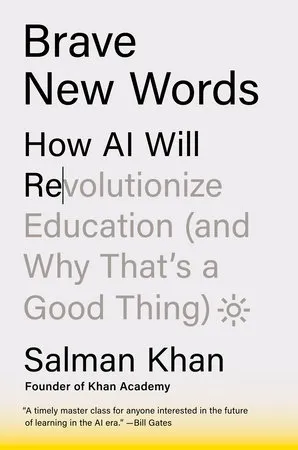
Brave New Words: How AI Will Revolutionize Education (and Why That's a Good Thing) (2024) looks like any other book you might see in the "Current Events" section, but I was drawn to it because it was written by Salman Khan. Khan is the eponymous founder of Khan Academy, one of the greatest gifts to the world of K-12 education. Even almost two decades later, the charming original videos are golden examples of pedagogy, and the playlist of scratchy YouTube clips has become a full-fledged company educating millions of students around the world. They seem like one of the few genuine positive forces in tech. I had imagined that they, if anybody, could skirt the sleazier side of the EdTech world by virtue of starting as a guy just videochatting with his younger relatives instead of a scheme hatched by gathering of suits (or more likely, Patagonia fleeces) to "disrupt education." Maybe the guy who jump-started the whole online education movement would have something interesting to say about AI and education?



Gene Wolfe has a short story titled “And when they appear” about a child and his holographic AI tutor. The parents are absent and the tutor keeps begging the child to go hide in the basement. The tutor, like the other fictional ones you mention in the review, is always available and ever patient. The child, however, keeps directing the AI tutor to do fanciful Christmas entertainments. At the end of the story, roving marauders carry off the child to their rape-van. I initially felt like this was some macabre shaggydog story, but after seeing discourse about AI educational tech I think there may be something more to it: a crucial component of education is making children do work they don’t want to do.
How effective is AI tutelage if it can’t force kids to show their work or to make them focus on avenues of thought that they would otherwise prefer to skim or gloss over? More industrious students may benefit from a sort of assisted auto-didacticism, but most are lazy and do the bare minimum. Many will opt for the path of least resistance and - as you put it - minimize engagement and outsource thinking.
Damn, that story was quite the read. I won't be forgetting that one! 10/10 recommendation. Thanks for that.
Focusing that story strictly to the context of the AI tutor, I think it actually expresses the hope I have overall. The child is bratty and recalcitrant, but ultimately disobeys and disregards the AI and probably makes the right call in doing so. This leads to dark consequences (geez, Wolfe) but even then there is a glimmer of hope. Doesn't mean we shouldn't do all we can to help, but I believe the kids may be all right in the end. Sometimes all you need is that one resource, or that one person who cares, to really turn things around.