



List
To be
A reader-curated list
Author
12 September 1921–27 March 2006
Also known as Stanislaw Lem, Stanislav Lem, Stanislas Lem, Станислав Лем, スタニスワフ・レム, スタニスラフ・レム, 斯坦尼斯瓦夫·莱姆, 斯坦尼斯瓦夫·萊姆, 스타니스와프 렘, Stanisław Estel, Irving T. Creve, Richard Popp, Professor A. S. Tarantoga, Prof. A. S. Tarantoga, Profesor A. S. Tarantoga, Professor Thomas V. Warren
Stanisław Herman Lem (12 September 1921 – 27 March 2006) was a Polish author known for his contributions to science fiction, philosophy, and literary criticism. Born in Lwów, Poland (now Lviv, Ukraine), Lem initially pursued medical studies, which, though unfinished due to fears of military conscription and discomfort with medical practice, laid the groundwork for his scientifically rigorous and philosophically rich writing. His early experiences during World War II, including surviving with false papers to avoid the Nazi Lwów Ghetto, deeply influenced his worldview.
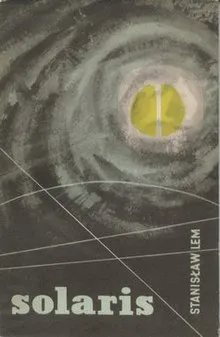
Lem's literary career began in 1946 with publications in various genres, including poetry and science fiction. His writings explore complex themes such as the nature of intelligence, human limitations, the challenges of communicating with alien entities, existential despair, and the implications of technological advancements. Notable works include Solaris, which delves into the difficulties of understanding an alien intelligence, His Master's Voice, focusing on humanity's struggle to decipher an extraterrestrial message, The Invincible, a narrative about a spaceship encountering self-replicating machines, and The Cyberiad, offering a satirical view of a mechanical universe.
His works have been translated into over 50 languages, with sales exceeding 40 million copies worldwide. Known for elaborate neologisms and intricate wordplay, Lem's writing posed significant translation challenges. Several of his works have been adapted for film and television, including Solaris (1972, by Andrei Tarkovsky, and 2002, by Steven Soderbergh). Lem's writings are recognised for their philosophical depth, imaginative scope, and incisive critique of humanity's relationship with technology and the cosmos, often blending satire and humour. He was critical of American science fiction, often expressing dissatisfaction with its lack of intellectual depth and commercial focus, advocating for more innovative storytelling.
Beyond fiction, Lem authored texts on futurology, literary criticism, and philosophy. His seminal work, Summa Technologiae (1964), discussed future technological and social developments, addressing themes such as virtual reality, cognitive enhancements, molecular nanotechnology, AI, technological singularity, and the moral-ethical implications of advanced technologies. Lem also experimented with metafiction in works like A Perfect Vacuum, which consists of reviews of nonexistent books.
(Sources: 1, 2)
177 works
Recorded as 2002; date may be inaccurate
76 editions
Recorded as 1980; date may be inaccurate
42 editions
Recorded as 1978; date may be inaccurate
37 editions
Recorded as 2005; date may be inaccurate
25 editions
Recorded as 1991; date may be inaccurate
22 editions
21 editions
Recorded as 1995; date may be inaccurate
21 editions
Recorded as 1995; date may be inaccurate
21 editions
Recorded as 1; date may be inaccurate
20 editions
Recorded as 1998; date may be inaccurate
18 editions
16 editions
Recorded as 2005; date may be inaccurate
14 editions
Recorded as 1998; date may be inaccurate
12 editions
11 editions
Recorded as 1997; date may be inaccurate
10 editions
Recorded as 1974; date may be inaccurate
10 editions
9 editions
9 editions
7 editions
10 editions
6 editions
6 editions
6 editions
5 editions
Readers in conversation
Public notes, reviews, lists, and conversations around Stanisław Lem.
A reader-curated list
A reader-curated list
Science is stagnating, everything that could be rationalized is now rational, and everything we cannot never will be. This is the apocalyptic reality that we and Kelvin begin to realise throughout the rambles of fictional scientific literature in Solaris. I f…
The beauty and focus of the interpersonal relationships are lost in a monotonous science fiction explanation for how the planet Solaris works.