
In the old house, in the shade of the silver dollar gum and the dead oak waiting to be ignited, the sage paint peeling and the yard made meager by drought, he had loved her. It was a long-ago love, a love that began and ended so quickly he didn't remember it so much as know that it had once occurred. He had an impossible memory where he observed, from the outside in, his child self kneeling over a narrow bed, praying to whatever higher power did or did not exist to let him die at the same time as her. He felt as an echo now his wish to never outlive her, and his dark hair stuck up in tufts at the back of his neck.
It was midwinter. The morning obdurate, the road out of town longer and steeper than he remembered. He passed the clapboard church, with its cross splintered by unlikely thunder. The brick-and-ivy courthouse where he had stood as a boy, right hand raised, and sworn an oath to a country he could hardly pronounce the name of. Then there was the cemetery, the lichen devouring the names of Confederate soldiers. Strange to think now how many afternoons he had spent walking amongst those dead, ignorant of history. Inventing for each man below the dirt a new life, long and bloodless.
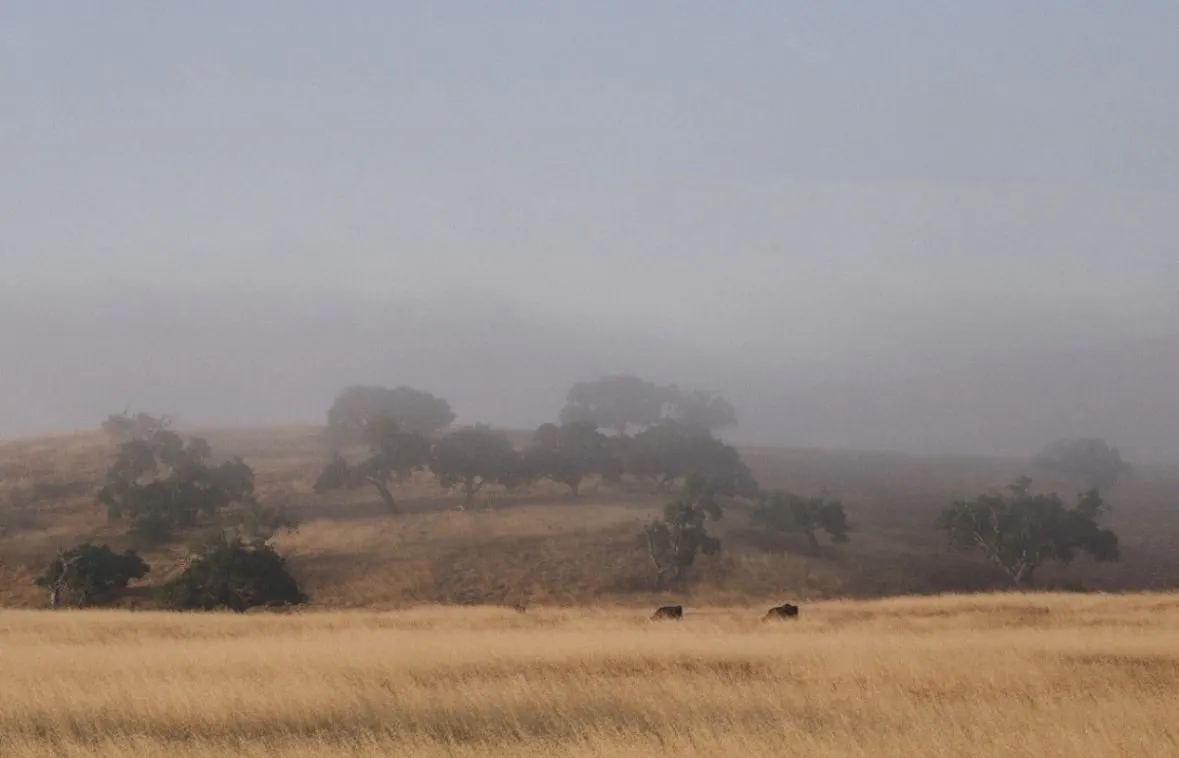
Harebells had bloomed on the hillsides then, bursts of lavender between beech trees boughed low, but now land had endured twelve years without rain. It was dust he returned to, desert and desertion.
Twelve years also the shooting had kept him away; somehow her tragedy was the harder one to bear. He paid three nurses to live with and care for her in alternating shifts, to bathe her and dress her and take her errant pulse. He counted himself lucky, that he had the foresight to become a rich man.
He thought of her every day.
Because he hadn’t known her presence, he thought of her absence. He thought of the room which housed her things, the cream on her dresser scented jasmine, her photographs from the mainland. She was a young woman in them, vivid and sad. He thought of the white of her sheets and walls, the door which he peered through like a thief, watching her gesticulate to someone invisible: I won't be driven out like a dog.
Her worn heels missing from the rack, the potatoes sprouting in the yard.
He thought of the sadness he had felt, the deep violet that was his loneliness before leaving this place, and he wondered what else he could turn into memory.
Suddenly, he was grateful. That he had listened to her, and not himself, and the old house still stood.
It was good, he thought, to have a place to say goodbye to.