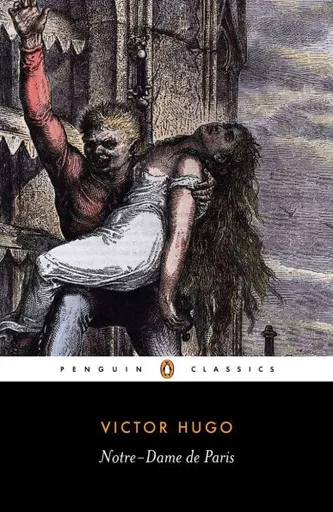

in english, the title of victor hugo's 1831 notre dame de paris is most commonly rendered as 'the hunchback of notre dame.' there is some notion of wishful thinking in this translation, perhaps a nod to what the reader might remember the novel to be about more than the actual text itself. in the original french, the cathedral stands alone--and as one reads our lady of paris, it becomes rapidly apparent why hugo would have chosen such a blunt title.
hugo wrote this entire novel in the span of 4 months after years of promising-without-delivering, and it is essentially a trussed-up public argument for the preservation of gothic architecture. the gothic and romantic elements of the novel--the shadowy figures lurking on the 15th century streets, obsessive and demonic love, the deformed and the maligned exterior hiding the noble heart, beauty disguising ugliness, mysticism, alchemy, you name it, it's there--feel somewhat haphazardly tacked onto and around the book's real subject, much like the attempted 'renovations' of the notre dame he so vehemently criticizes.
at the time of this novel's publication, the notre dame de paris was falling into disrepair; hugo's novel revived public interest in the cathedral and in 1842, the french government decided to undertake a major renovation to which 5 million francs would eventually be allocated. in this sense, the novel's "project" (SAVE. OLD. CHURCH.) was a resounding success; and it is perhaps to this novel that the notre dame owes its modern brand recognition and tourism stats.