

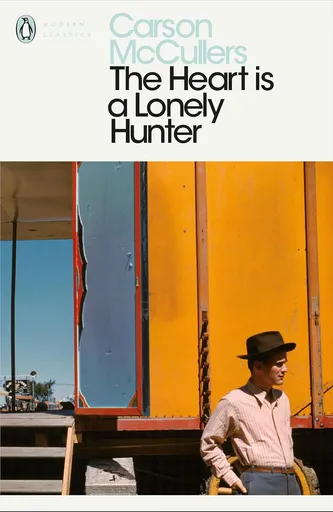
My relationship with this book and with Carson McCullers will make it impossible to write a proper review without veering into an emotional blog post, so you have been warned. This novel has sat in my heart for over five years now, and still, every time someone asks me to recommend a book or asks me what my favourite book is, I become giddy at the opportunity to talk about it. I buy up every copy I find in second-hand bookstores, and I gift these copies to anyone who feels special to me. If someone were to ask me how I felt about life, I could give them this book and say nothing of myself.

I love this novel, and I think you've done an excellent job describing what makes it so great. I might have to re-read it because of this review. How does McCullers' other work compare to this ? I feel like I never see it discussed as much.
I think The Member of the Wedding is her best novel. It largely has the same themes of loneliness, love, and isolation, and even an almost identical main character, but she has trimmed down all the fluff. It doesn't have the preachy tone THIALH sometimes has, and the symbolism isn't quite so on the nose. Reflections in a Golden Eye is a really bizarre novel. You can still detect her style and the usual theme of loneliness, but it's nothing like her other work. If I remember correctly, it was just an offhand novella she wrote that wasn't originally meant to be published. It's really brilliant though. I think it's the Southern Gothic style perfected. It's really uncomfortable and gross and weird, but McCullers does it in such a perfect way you hardly notice. You feel like you've stagnated around this filth your entire life. Ballad of the Sad Cafe was a return to usual stuff. More in a folky style, hence the name. One criticism you can make of her is that, other than Reflections in a Golden Eye, she can be quite one-note as an author. She does focus on the pain involved in love and unrequited love, and of course being a freak. Clock Without Hands, I would ignore entirely. She wrote that later in life, after all of her strokes, and it really shouldn't have been published, to be honest. Apparently it arrived with heavy, heavy editing from the publisher. If you do really love her books I would recommend her biographies as well. She had a very sweet soul. https://www.youtube.com/watch?v=oY7TQVCSFL8 And a lovely voice too of course. You can really hear the pain in her words.